Belarus Military Power - The two leaders—Putin and Lukashenko—have been rather vague about the topics discussed during their meeting on Monday. According to Putin, the two talked about forming a "unified defense space," as well as the training of the crews of Belarusian warplanes that have already been modified to make them nuclear-capable.
Ledwidge thinks a similar scenario is likely—or that at least that's what Moscow wants Kyiv to believe. "My own view, and I think the view of many experts, is that the purpose of saber-rattling from Belarus is what's called 'fixing' Ukrainian forces in the north," he said.
Belarus Military Power
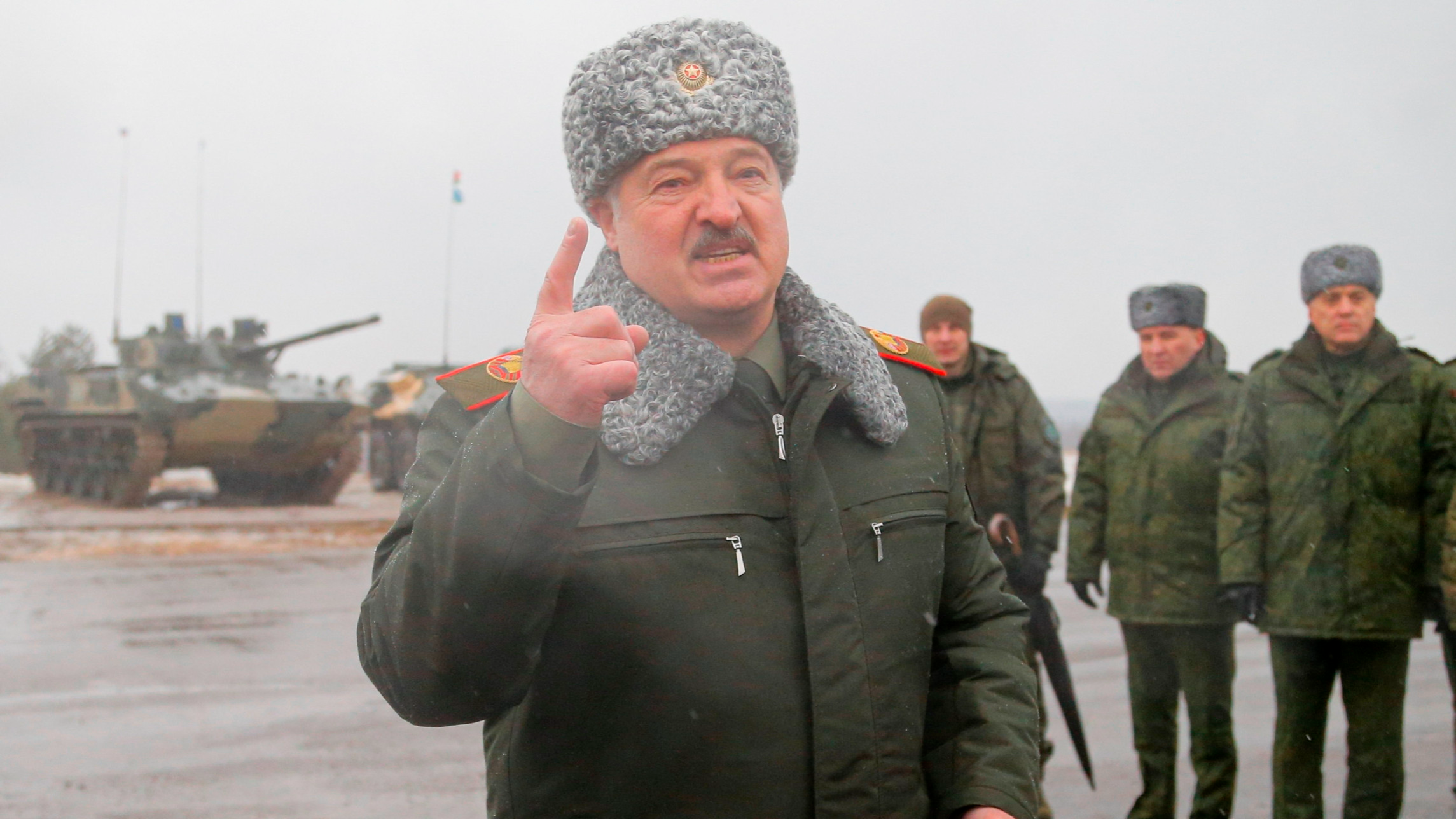
Ukraine has repeatedly warned that something similar might happen again soon. Kyiv is worried Minsk might allow Moscow troops to prepare a new offensive on the Ukrainian capital from its grounds, attacking from Ukraine's northern border.
Belarus Involvement Is Unlikely
"Lukashenko is likely delaying acceding to Putin's larger demands—such as committing Belarusian forces to join the invasion against Ukraine—by making smaller concessions that he has stonewalled for years," the ISW wrote on a report on December 20.
Belarus has close security ties with Russia. In 2022, Belarus allowed Russian military forces to stage on its territory during its invasion of Ukraine. Russia is the main supplier of arms to Belarus, and Belarusian troops reportedly train on Russian equipment.
The inventory of the Belarus Armed Forces is comprised mostly of Russian and Soviet-origin equipment, and since 2010 Russia is the leading provider of arms. Belarus's defense industry manufactures some equipment (mostly modernized Soviet designs). 18-28 years of age for male and female voluntary military service;
conscription phased out in 2009-12; service obligation shortened from 12 to 9 months in 2005; women only allowed to serve as officers and noncommissioned officers. "I think most commentators would say that, against the background of the 2020-2021 protests in Belarus, a direct involvement of Belarusian forces in the war would be almost suicidal for the regime, since the great majority of people would not support that. They

have such close links with Ukraine, for a start." "But even that would be just one piece of what is sure to be a new Russian strategy to delink the Baltics from NATO by demonstrating that the alliance can no longer hope to protect these countries," he wrote.
"NATO had been focused on all these important and fashionable things with little to do with its core responsibility, like climate and cyber," Mr. Lesser said. "But we forgot that there are ruthless people out there and for them, foreign policy is a blood sport."
But a serious effort to deter a newly aggressive Russia will not be so simple, said Benjamin Hodges, the former commander of U.S. forces in Europe, now with the Center for European Policy Analysis. Just moving troops and equipment around in a post-Cold War Europe has become far more cumbersome, with some bridges and railways no longer able to handle heavy armor.
Even if military spending goes up considerably in response to the new Russian invasion, as it did modestly after Russia took Crimea, new and permanent deployments of forces, equipment, planes and even missiles will be a major blow to the last 30 years of relative peace
, prosperity and complacency in the alliance. NATO was already rewriting its 12-year-old strategic concept and debating a replacement for Mr. Stoltenberg, who leaves office on Oct. 1. Now, those tasks become ever more pressing. "NATO is already in a mode to think more broadly about its purpose," Mr.
Lesser said. "We need the Americans," said Mr. Bond. "But we should not drop the idea of European autonomy and more self-reliance.'' There are doubts in Europe about whether President Biden will run or win again in 2024 and worries that former president Donald J. Trump or a Republican more in tune
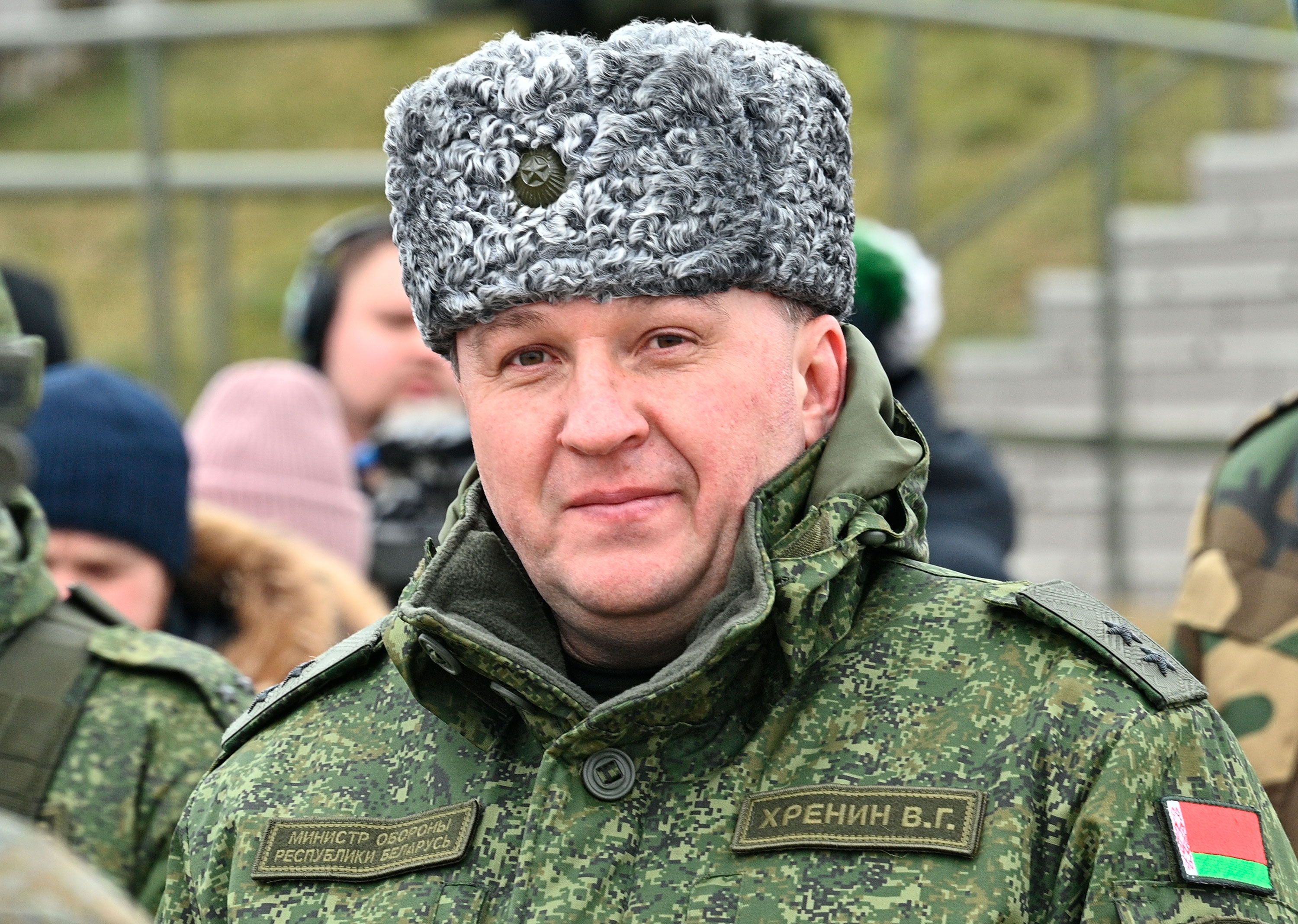
with his isolationist, America first credo will take office. Lukashenko announced on December 13 that his army was assessing its combat readiness, but military experts—including the Washington-based think tank Institute for the Study of War (ISW)—think it's "unlikely" that Belarusian troops will be sent to Ukraine.
If you believe this is an error, please contact Helpdesk or use this form. Please provide the URL you were trying, your public IP and this error code:0.b558d617.1677838984.d8b5995 "The level of risk for NATO has simply and suddenly increased enormously," said Ian Lesser, a former American official who heads the Brussels office of the German Marshall Fund.
"The possibility of conflict with Russian forces in Europe or elsewhere, like the Black Sea, the Sahel, Libya or Syria, could be dangerous and will be an issue for years to come." The corridor separates Belarus from Kaliningrad, headquarters of the Russian Baltic Fleet and isolated from Russia when the Soviet Union imploded.
An emboldened Mr. Putin might very well demand direct access from Belarus to Kaliningrad, suggested Robert Kagan of the Brookings Institution in a column for the Washington Post. "Belarus has very limited regular forces. If you take into account Russian casualties, even over the last three months alone, that probably exceeds the entire strength of the Belarusian army," he said.
"So even if no other factor is taken into account, they are not going to be significant." Altogether, the new threats should reinforce the logic of stronger European Union and NATO cooperation on defense, Mr. Lesser said, "and should knock a lot of the politics and theology out of that relationship.'' Coordinating with the E.U.
over its areas of strength, like economic sanctions, cyber resilience, energy security and information warfare can only help both organizations, he said, given that 21 of the E.U.'s 27 members already belong to NATO and others, like Sweden and Finland, are

closely allied. There are also questions about the vow of NATO members to send weapons to Ukraine as it fights the Russians or to help mount an insurgency. Efforts to supply arms to Ukraine by air, rail or road could be intercepted or obstructed by the Russian military, Mr.
Hodges said, even if the shipments are delivered by contractors and not NATO soldiers. If Russia succeeds in taking over Ukraine and keeping bases in Belarus, as many experts now expect, its forces will extend from the borders of the Baltics and Poland to Slovakia, Hungary and northern Romania, making it significantly harder for NATO to defend its eastern flank
. But the smaller force is essentially untested, and the larger Response Force of which it is the spearhead is only a quarter the size of the Russian invasion force into Ukraine. The larger force was created in 2002 and was meant to be rapidly deployable, but its 40,000 members are based in their home countries and gathering them can be a slow exercise.
In 2014, NATO also established a "very high readiness joint task force," currently under the command of Turkey, that is supposed to deploy at short notice against threats to NATO sovereignty. It consists of a land brigade numbering around 5,000 troops, supported by air, sea and special forces, with more reinforcements able to be deployed within 30 days.
Once the Fulda Gap in Germany was a concern of Cold War strategists, heavily defended by American troops to prevent the Warsaw Pact from rushing tanks from East Germany to the Rhine River. Now, the concern is the Suwalki Corridor, a narrow gap that connects Poland to Lithuania that, if captured, would cut off the three Baltic nations from the rest of NATO.
"So, while many factors might point towards involvement which should not be entirely excluded, it may be done to create uncertainty in the minds of Ukrainian military leadership as far as the location of the major offensive is concerned and to divert Ukrainians' attention away from

the Donbas." "It is plausible to believe that Belarus military personnel is not equipped, experienced, and motivated enough to enter the conflict. For Russia, Belarus offers the possibility to station and train its troops and solve logistical problems. So, Belarus's dependence on Russia and her
geographic location makes her an attractive ally." NATO has already responded in a small way to the Russian buildup, sending some extra troops and aircraft into member states closest to Russia. On Thursday, NATO decided on further, unspecified deployments, and there are serious discussions about finally scrapping the 1997 NATO-Russia Founding Act, which put limits on NATO deployments in the eastern members and which Russia violated eight years ago, when it invaded Ukraine and
annexed Crimea. British former military officer Frank Ledwidge thinks it unlikely that Putin is after the direct involvement of Belarusian troops in Ukraine. The Belarusian army—especially in terms of troops that could be immediately involved in maneuver operations—is quite limited compared to that of Russia's, he told Newsweek.
Despite the close—though often begrudged—alliance between Lukashenko and Putin, which has allowed the Belarusian leader to keep his 28-year grip on power after mass protests in August 2020 over his victory in a contested election, a majority of the population strongly opposes
the Moscow-ordered invasion of Ukraine. "Russia's actions pose a serious threat to Euro-Atlantic security, and they will have geostrategic consequences," said the NATO Secretary-General, Jens Stoltenberg. "We are deploying additional defensive land and air forces to the eastern part of the alliance, as well as additional maritime assets.''
In general the chance of accidental confrontations leading to escalation cannot be ruled out in such a tense atmosphere. Analysts point to the way Turkey shot down a Russian fighter plane near the Syria-Turkey border in 2015. "It didn't escalate then, but today it very well could," Mr.
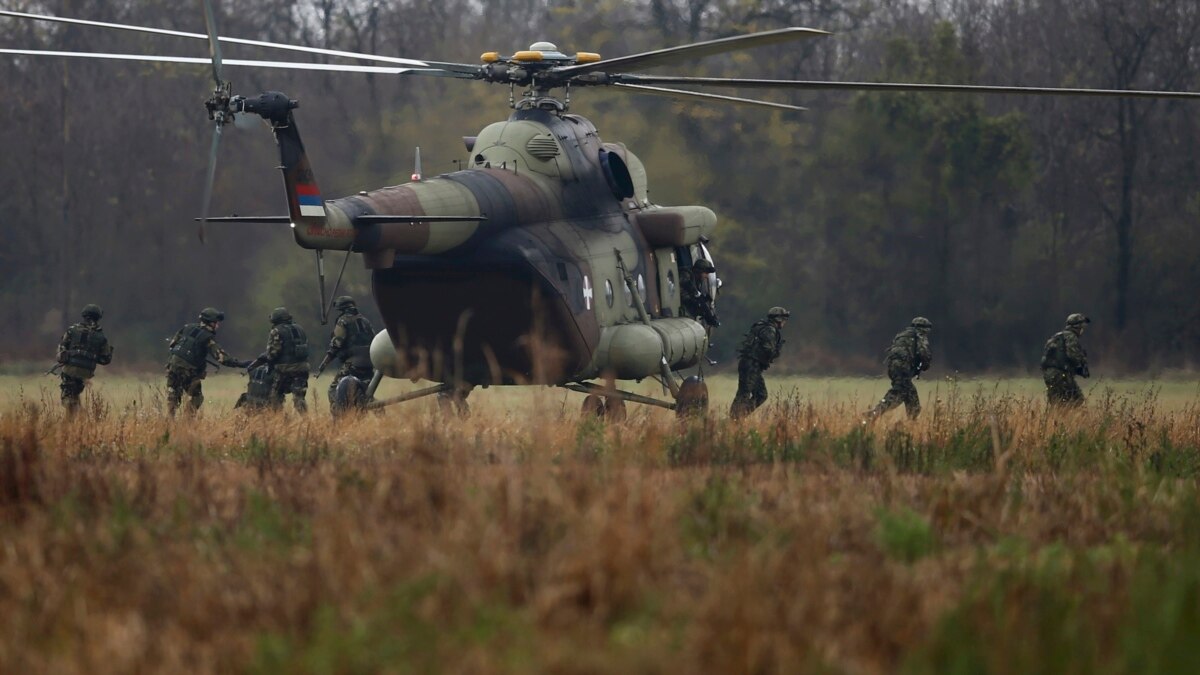
Lesser said. And only a thin corridor some 60 miles long between Lithuania and Poland separates Russian forces in Belarus from Kaliningrad, the Russian territory on the Baltic Sea that is stuffed with missiles easily capable of flinging conventional or nuclear warheads into the heart of Europe.
"Perhaps surprising for Belarus is its number of military reserves, namely 290,000. Belarus also has conscription for those aged 18 to 27. The duration of conscription can be up to 18 months, depending on academic qualification.
"The threat now to Poland becomes acute," said Mr. Bond, recommending that the United States quickly put two heavy battalions in Poland "for a start." The deployments in the three Baltic states also need to be beefed up, he said.
"This changes everything for NATO," said Ian Bond, a former British diplomat who heads foreign policy at the Center for European Reform. "Russia's aim is to extinguish Ukraine as a sovereign country in Europe. Now we need to worry about everything, and we need to get serious again.''
how big is belarus military, poland vs belarus, belarus army equipment, military of belarus, belarus army size, belarusian military, belarus military strength today, armed forces of belarus